Woodcraft cabinets are made the way we would make them for our own homes. Details include 3/4” thick hardwood face frames and door frames, 3/4" plywood shelves, dovetailed drawer joints, a choice of standard or soft-close hinges, and a choice of full-extension and soft-close drawer glides. These features are most desired in cabinetry today. Plus, our cabinets have the advantages of using real wood instead of particle board. We create cabinets that have no limitations when it comes to finishing, and perform well in the naturally moist environment of kitchens and bathrooms. Our cabinets come ready to finish, painted or stained, and ready to install.
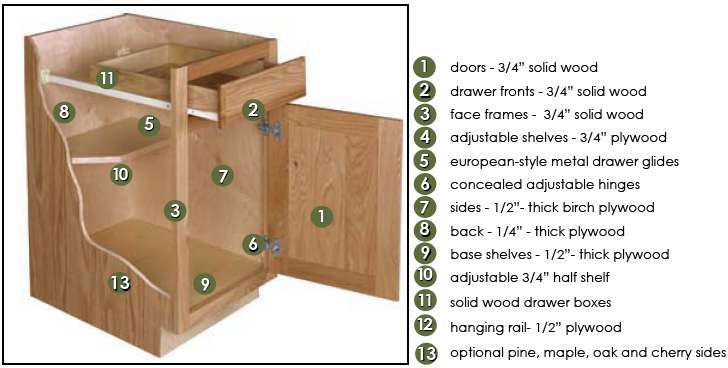
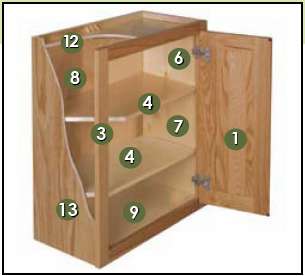
Our premium grade kitchen and bath cabinets are constructed with 1/2" thick Birch plywood sides. If a cabinet side needs to be exposed and stained, it would be advisable to select one of the side options: stain-grade side, 3/4" flush stain-grade side, or stain-grade end door. These options replace the standard Birch plywood with stain-grade plywood to match the front of your cabinets. Another option is to cover the plywood sides with a 1/4" thick end panel skin or plain or beadboard material. Since the face frame of cabinets are about 1/4 of an inch wider than the sides, the end panels will make the sides look flush with the front.
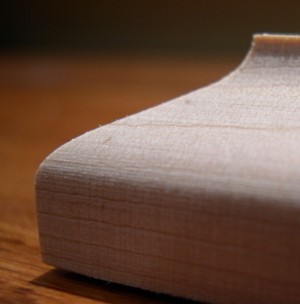
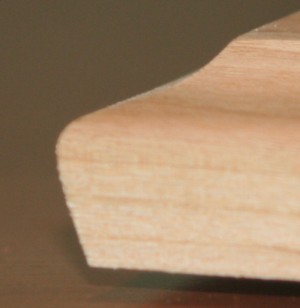
Kitchen cabinets with flat-panel, raised-panel, or beadboard doors have a beveled outside edge using the L-edge profile (below left). The Reverse-bevel edge is a non-standard option. Reverse raised-panel doors appear to have flat-panels because the raised portion has been flipped to the inside or the door. Shaker doors have square edges. See the door styles page for more details.
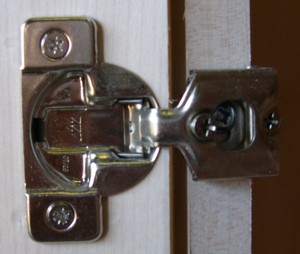
Kitchen and vanity cabinets come standard with hidden "Euro" 35mm door hinges with either a 1/2-inch overlay or a 1-1/4-inch overlay (for the full-overlay door styles). The 1/2" overlay hinges will leave 1" of the frame exposed (called the "reveal"). The 1-1/4" overlay hinges will only leave a 1/4" frame reveal. These hinges allow the door to open 110 degrees. Soft-close hinges, which take several seconds to fully close, are optional. Doors do not come with knobs, and no holes will be drilled into your cabinet doors, so you are free to purchase any style of hardware you want from any source. For additional choices, we recommend Rockler.com or Knobs4Less.com, or other stores on our links page for a great selection of cabinet pulls.
Soft-Close door hinges have 3-way adjustments to allow fine tuning of the door position in/out, up/down, and left/right, as you can see in the photos below.
The two screws on the left adjust the door position up/down or left/right:
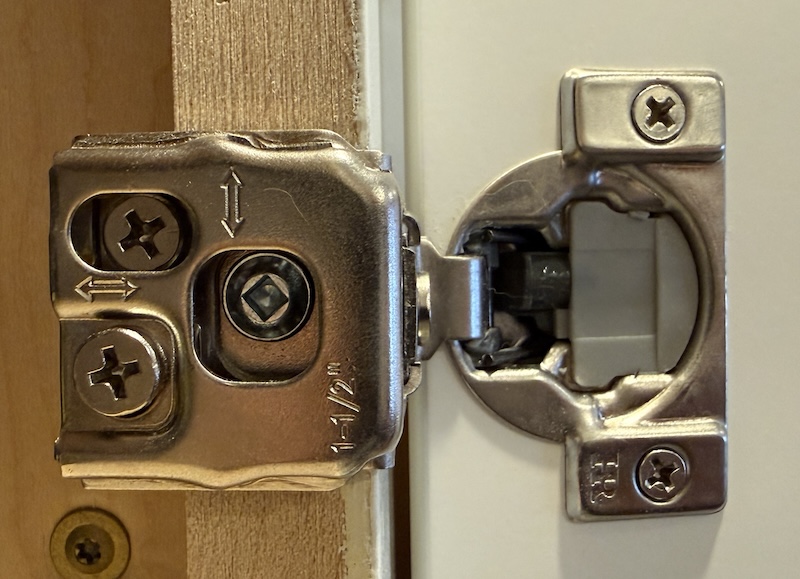
The screw on the front of the hinge will adjust the door in/out from the face frame:
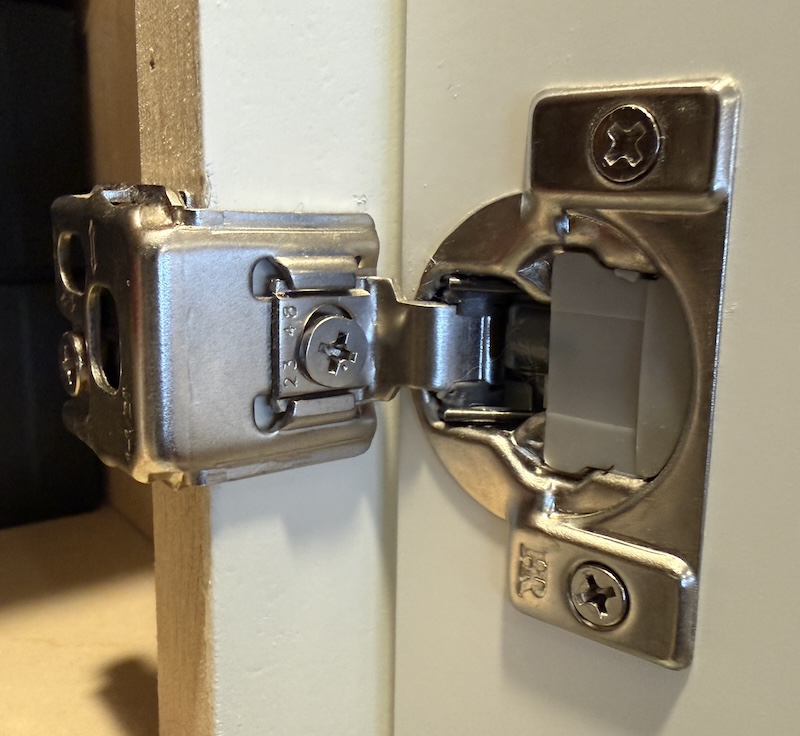
Soft-Close inset door hinges also have 3-way adjustments to allow fine tuning of the door position in/out, up/down, and left/right:
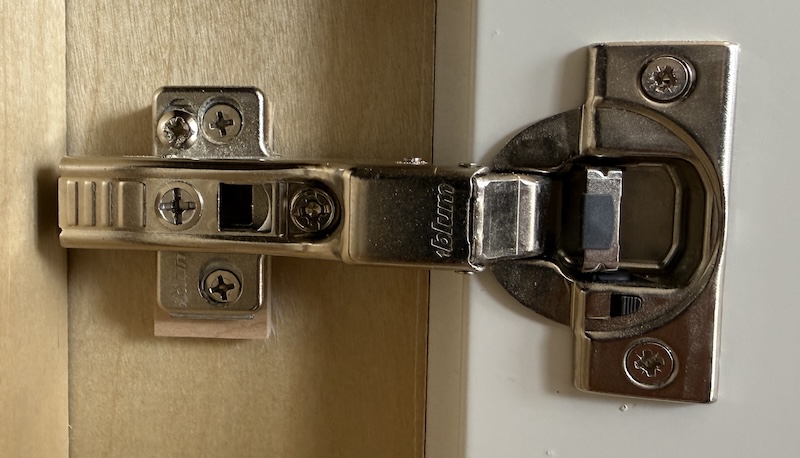
This is a standard Euro door hinge:
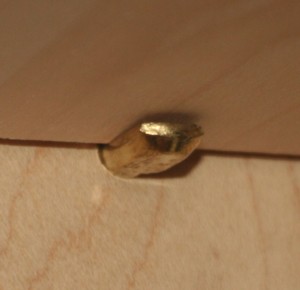
Drawer boxes feature 5/8" thick sides and English-dovetailed joints and dados, which lock the bottom in place and give each drawer added strength and durability. See the cabinet options page for more details. Wall cabinet holes are pre-drilled every 1.25" for adjustment of the 3/4" thick shelves, which are held in place with brass shelf pins.
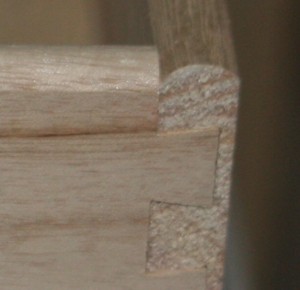
Cabinets come standard with 5/8" thick wood drawer boxes with full-extension side-mount drawer glides. Full-extension glides can support at least 75 lbs and allow the drawer to pull all the way out. Cabinets can be upgraded to 5/8" thick Maple drawer boxes and/or soft-close full-extension undermount self-closing glides. Soft-close full-extension glides are an optional upgrade.
The photo below shows the front joint of a base 3-drawer kitchen cabinet where the solid wood face frame meets the plywood sides. You will notice that the sides are recessed 1/4" from the face frame. This is to prevent adjacent cabinets from pressing against each other. If a cabinet will be on the end of a row of cabinets, where one side will be exposed, you can add an end panel skin to fill in this space with stain-grade material or order the cabinet with a 3/4" thick flush side. If you just choose to have a stain-grade finished side, you get 1/2" thick furniture-quality plywood that matches the species of wood used on the front of the cabinet, but it will still have the 1/4" recessed area, as seen from the top in the photo below.
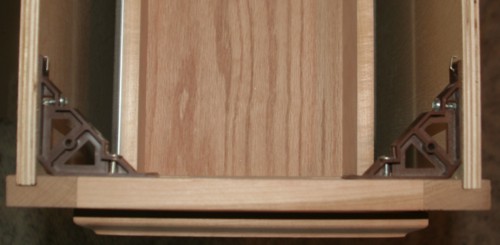
The photo below shows the back joint of a base 3-drawer kitchen cabinet with full-extension glides.
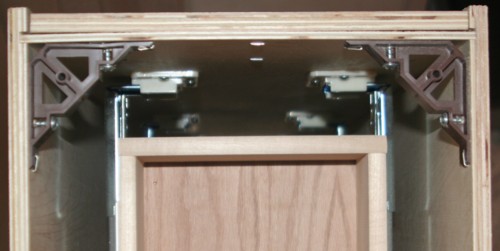
The photo below shows the inside front of a combination vanity cabinet with a removable false drawer front at the top and drawers below. This type of cabinet would be used with a sink in the top portion. We can also install a tilt-out tray onto the false drawer front.
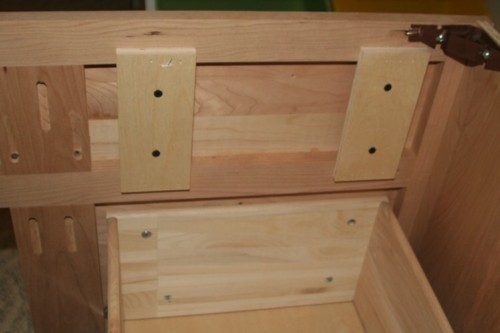
The photo below shows the standard side-mounted heavy-duty 75 lb load full-extension glide.
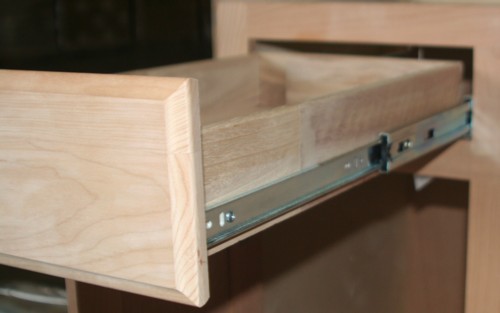
The photo below shows a soft-close undermount full-extension drawer glide.
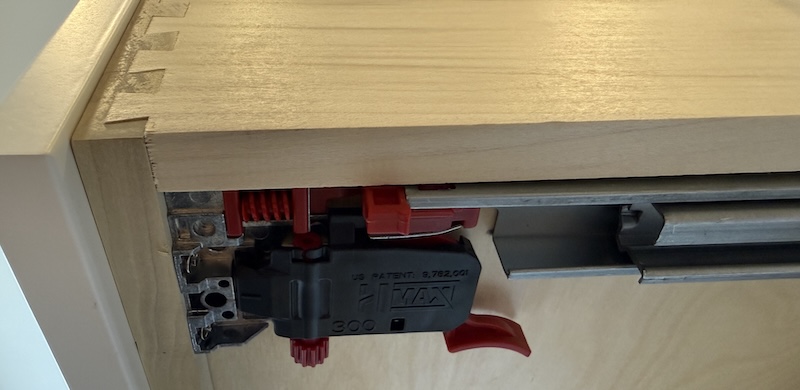
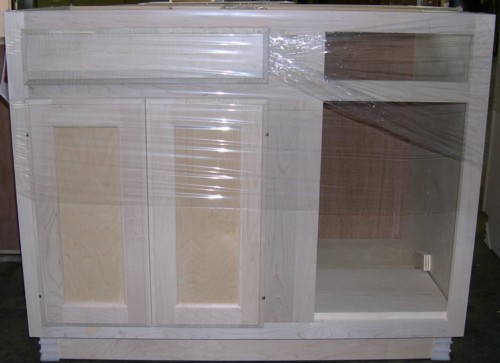
Blind base cabinets need to be installed between 6-9 inches from the wall on the blind side. So, the part of the cabinet that will be hidden will only be 15-18 inches wide. The farther out you pull it from the wall, the more clearance you will have to open the door. Below you can see an example of a blind base cabinet with the blind side on the right.
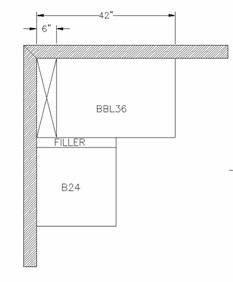
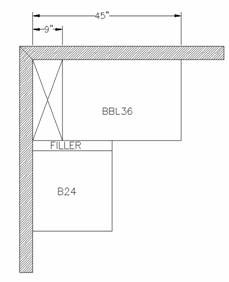
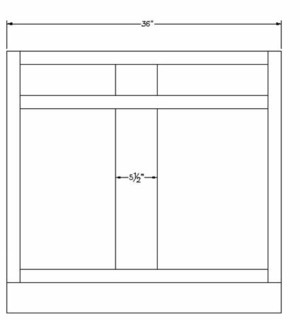
The diagram below shows that a 36"W blind base cabinet requires 42-45" of space along the wall. The filler strip is recommended if you also need additional space to open the door of an adjacent base cabinet.
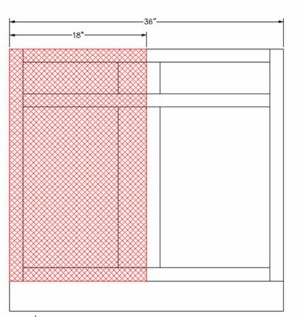
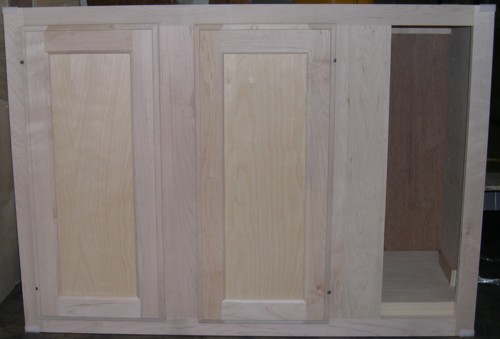
Blind wall cabinets can be placed between 0-3 inches from the wall on the blind side. Below you can see an example of a blind wall cabinet with the blind on the right.